
How to Keep Passport Secure While Traveling
Table of Contents
- How to Keep Your Passport Secure While Traveling: A Step-by-Step Approach
- Step 1: Choose the Right Gear for Passport Security
- Step 2: Best Travel Bags for Passport Security
- Step 3: Digital Passport Backup Tips
- Step 4: Secure Storage at Hotels and Lockboxes
- Step 5: What to Do If Your Passport Is Lost Abroad
- Step 6: Situational Awareness and Theft Prevention
- Step 7: Protecting Your Passport from Environmental Damage
- Frequently Asked Questions
Last Updated: October 4, 2026
How to Keep Your Passport Secure While Traveling: A Step-by-Step Approach
Your passport is the one item you cannot replace on the road. Lose it, and your trip stops cold. That is why learning how to keep passport secure while traveling matters more than any packing trick you will read this year. This guide from VentureVault.Shop walks you through seven steps, from choosing the right bag to handling a worst-case loss.
Here is the good news: most passport theft is preventable. Thieves target easy marks, not careful travelers.
Below, we break down the gear, the habits, and the backup plan that keep your travel document safe from your front door to your return flight.
Step 1: Choose the Right Gear for Passport Security
Good gear solves most of the problem. A money belt or cross-body bag worn against your body keeps your passport out of reach in crowds. Pick one method, learn it well, and stick with it for the whole trip.

Money Belts and Cross-Body Bags
A money belt sits flat under your clothes. Nobody sees it, and nobody can grab it.
A cross-body bag keeps items in front of you, where your hand rests naturally. Look for slash-proof straps and zippered pockets that sit against your chest.
- Money belt: best for crowded transit and overnight trains
- Cross-body bag: best for daily sightseeing and airport days
- Neck pouch: a light option under a shirt for backup cash
Passport Covers and Holders
A passport holder keeps the booklet stiff and dry. It also hides the cover, so nobody nearby knows what you are carrying. Skip flashy logos. Plain beats branded every time.
RFID-Blocking Technology: Does It Really Work?
RFID-blocking material blocks radio signals from reaching chip-enabled cards and passports. It works as advertised, but the real-world risk is low. Most thieves want the physical booklet, not your data. Treat RFID protection as a bonus, not your main defense.
Step 2: Best Travel Bags for Passport Security
The best travel bags for passport security share three traits: they sit against your body, they close with real zippers, and they keep your documents hidden. A bag that swings loose or opens with one pull is an invitation.
Here is how the main options compare:
| Bag Type | Security Level | Best For | Main Drawback |
|---|---|---|---|
| Money belt | High | Crowded transit | Slow to access |
| Cross-body bag | High | Daily carry | Needs a slash-proof strap |
| Backpack | Low | Hiking days | Easy to open behind you |
| Jacket pocket | Very low | Never | First thing a pickpocket checks |
A backpack is fine for a trail. It is the worst choice for a train station.
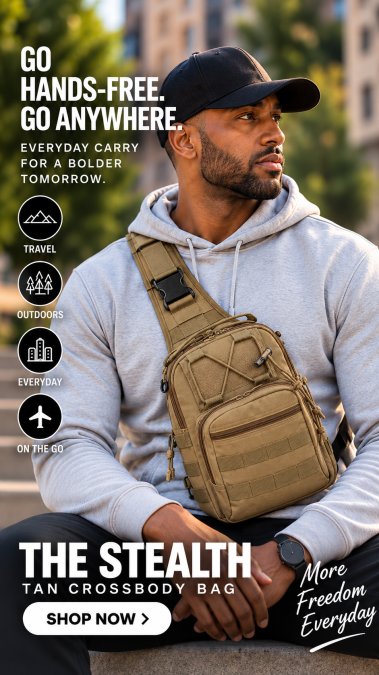
At VentureVault.Shop, our crossbody bags are built for exactly this job. The Sentinel, The Stealth, and The Vault each keep essentials in front of you, hands-free, with multiple zippered compartments and an adjustable padded strap. They are made for everyday carry and travel days alike.

Step 3: Digital Passport Backup Tips
Digital passport backup means storing a photo of your passport's data page where you can reach it from any device. It takes five minutes and can save your entire trip.
- Photograph the photo page and signature page
- Email the images to yourself
- Save them in cloud storage you can open abroad
- Store the emergency contact numbers for your embassy or consulate
Step 4: Secure Storage at Hotels and Lockboxes
A hotel safe is safer than your room, but it is not a vault. Use it for your passport when you do not need it, and carry a photocopy instead. Leave the original locked away on beach days and nights out.
Carry It or Lock It? The Real Trade-Off
Most travel-security practitioners land on the same rule: your passport should be on your body on transit days and locked away on stationary days. The logic is simple. On a travel day, you cannot afford to be separated from your document by a missed connection, a delayed bag, or a hotel that loses your property. On a beach or museum day, the risk shifts, a pickpocket in a crowd is a bigger threat than a hotel safe.
The Vault – Black Crossbody Bag →
- Carry on person: travel days, border crossings, any day you change cities
- Lock in safe: beach days, pool days, long tours where you will not need ID
- Never: leave it in a checked bag, a coat pocket, or a room drawer
How to Vet a Hotel Safe Before You Trust It
Not every safe is equal. A common pattern is that budget properties use safes with a universal override code the front desk can enter. That is not a dealbreaker, but it changes your risk math.
- Confirm the safe actually locks before you walk away, pull the door
- Set your own code, never the factory default (often 0000 or 1234)
- Ask at check-in whether the front desk holds a master key or override code
- Photograph the safe and its contents before you close it, in case of a dispute
- Skip the safe entirely if the door feels loose or the lock is clearly damaged
Lockboxes, Hostels, and Shared Accommodation
In hostels and shared rentals, the calculus changes again. A locker with your own padlock beats a front-desk envelope every time, because it removes a stranger from the chain of custody.
- Bring a TSA-approved padlock for hostel lockers
- Use the in-room safe over the front-desk option when both exist
- In a shared rental, treat any provided lockbox as convenience, not security
- Keep your passport on you overnight in high-turnover dorms
What to Carry Instead
On days you lock the original away, carry a photocopy of the data page plus a phone photo. In most countries this is enough for a police check or a hotel check-in. A small number of destinations legally require the original on your person at all times, verify the rule for your specific country before you decide, because the penalty for carrying a copy where the original is mandated can include a fine.
Step 5: What to Do If Your Passport Is Lost Abroad
Act fast and in order. Report the loss to local police, then contact your embassy or consulate the same day. They issue the emergency travel document you need to get home.
Most guides stop there. The steps below go further, because the difference between a two-day detour and a two-week nightmare is knowing exactly who to call, what to bring, and what to expect.
Step-by-Step Recovery Protocol
- File a police report the same day. In many countries the report is a legal prerequisite for the embassy to issue a replacement. Ask for a stamped copy, you will need it more than once.
- Report the loss to your embassy or consulate. Find the nearest one before you travel, not after. Save the address and after-hours emergency line in your phone and in your cloud backup.
- Bring your backup. The photocopy and phone photos from Step 3 are what let the consular officer verify your identity and citizenship quickly.
- Complete the replacement paperwork. Expect an in-person appointment. Some posts accept walk-ins for emergencies; most require an online booking first.
- Pay the fee and collect the document. Emergency travel documents are typically issued faster than full passports, but processing time varies widely by post and by day of week.
- Notify your airline and, if relevant, your travel insurance provider. A replacement document may change which countries you can transit through.
Lost vs. Stolen: Why the Distinction Matters
A passport that fell out of your bag and one that was lifted from your pocket trigger different responses. A stolen passport can be used for identity fraud, so the police report and the embassy notification are not optional, they create the paper trail that protects you if someone tries to use your identity later.
- Lost: police report, embassy visit, replacement
- Stolen: the same, plus a fraud alert if your home country offers one
- Damaged: treat it as lost, border control can refuse a waterlogged or torn booklet
What to Expect at the Embassy
Consular officers handle lost-passport cases constantly, so the process is well-worn. What varies is the timeline. A common pattern is that emergency travel documents are issued within one to three business days, while a full replacement passport can take weeks. Bring passport photos if the post requires them, and bring any secondary ID you still have, a driver's license, a student card, a photocopy of your passport data page.
For official steps, check the U.S. State Department guidance on lost or stolen passports abroad. Travelers from other countries should contact their own embassy, the mechanics are similar, but the forms and fees differ.
Step 6: Situational Awareness and Theft Prevention
Awareness stops more theft than any gadget. Pickpocketing happens in crowds, at stations, and around tourist landmarks. Keep your bag in front, your hand on the zipper, and your eyes up.
- Stand away from the train door crush
- Never hang your bag on a chair back
- Keep your passport in one fixed spot
- Split cash and cards across two places
- Trust your gut when someone crowds you
Step 7: Protecting Your Passport from Environmental Damage
Water and heat ruin passports as fast as thieves do. A soaked or warped booklet can be refused at border control. Store yours in a ziplock bag inside your bag, and keep it out of direct sun.
- Rain and spills: use a sealed plastic sleeve
- Heat: never leave it in a hot car or on a beach towel
- Wear: keep pages flat, never fold them
- Humidity: add a silica packet for wet climates
Most travelers only think about their passport when it is already gone. Do not be that traveler. Build the habit now: pick a body-worn bag, back up your documents, and keep your essentials in front of you where they belong.
At VentureVault.Shop, we build crossbody bags for exactly this. The Sentinel, The Stealth, and The Vault each offer hands-free carry, multiple zippered compartments, and an adjustable padded strap for all-day comfort.

Frequently Asked Questions
Should I carry my passport with me or leave it in the hotel safe?
It depends on local laws and your plans. Some countries require you to carry ID at all times. In others, a hotel safe is safer than carrying it in crowded areas. If you leave it, use a locked safe and keep a photocopy with you. Never leave your passport unattended in a hotel room.
What should I do if my passport is lost or stolen while traveling?
Report the loss to local police immediately and get a written report. Contact your embassy or consulate to apply for a replacement. Bring any photocopies or digital copies you have, plus additional ID and passport photos. Having a digital backup can speed up the process significantly.
Are crossbody bags better for passport security than backpacks?
Crossbody bags keep your passport in front of you, making it harder for pickpockets to access. Backpacks sit behind you and are easier targets in crowds. For passport security, a crossbody bag with a slash-proof strap and zippered compartments offers better protection.
How can I make digital copies of my passport for emergencies?
Scan or photograph the photo page and any visa pages. Save the files to a password-protected cloud service and email them to yourself. Do not store them on your phone's gallery without encryption. Keep the digital copy separate from the physical passport.