
Can One Bag Work for Hiking and Commuting? 2026 Guide
Table of Contents
- One Bag, Two Lives: The Case for Hiking and Commuting With a Single Carry
- Hiking Pack vs Commuter Pack: What Actually Differs
- The One-Bag Decision Framework: Should You Carry One or Two?
- Sling Bag for Hiking: How a Compact Crossbody Handles the Trail
- Sling Bag Capacity for Commuting: How Much Space You Really Need
- Sling Bag vs Backpack for Commuting: Which Carry Wins on Transit
- Sling Bag Packing Checklist for a Commute and a Day Hike
- Fitting, Adjusting, and Keeping One Bag Comfortable All Day
- Frequently Asked Questions
Last Updated: October 8, 2026
One Bag, Two Lives: The Case for Hiking and Commuting With a Single Carry
Can one bag work for hiking and commuting? Yes, for most people it can. A compact crossbody sling handles a laptop, lunch, and water bottle on the train, then switches to trail mode with a jacket and snacks.
The catch is fit, not philosophy. A bag that rides well on a crowded platform often sits wrong on a steep climb. Get the strap and load right and one carry does both jobs.
Hiking Pack vs Commuter Pack: What Actually Differs
A hiking pack moves weight onto your hips; a commuter pack protects a laptop and stays flat against your back on a busy train. That difference explains almost everything else.
Straps, Frames, and Load Distribution
Trail packs use a hip belt and rigid frame for heavy loads over long distances. Commuter bags skip the frame and rely on a padded shoulder strap. A sling sits across your body, so the load rests on one shoulder and your chest.
For loads under about 5 kg, that's fine. Above that, a hip belt earns its place.
Fabric, Zips, and Weather Protection
Trail bags usually win on water resistance with coated fabric and taped seams; commuter bags often use lighter material with basic splash protection. If you ride or walk in the rain, look for coated fabric, covered zips, and a flap over the main opening.
| Feature | Hiking Pack | Commuter Pack | Sling Crossbody |
|---|---|---|---|
| Load support | Hip belt and frame | Shoulder strap | Crossbody strap |
| Laptop sleeve | Rare | Common | Compact, padded |
| Weather protection | High | Medium | Medium to high |
| Access on the move | Slow | Medium | Fast |
| Best for | Heavy loads, long trails | Office and transit | Light loads, both uses |
The One-Bag Decision Framework: Should You Carry One or Two?
Most articles say a hybrid bag is a compromise. True, but not useful. The real question is whether your specific week fits inside one bag's limits. Use this three-factor framework.
Factor 1: Commute Frequency and Mode
Count how many days per week you carry the bag to work, and how you get there.
- 5 days, train or bus, under 30 minutes: one bag is almost always enough.
- 5 days, walk or bike over 30 minutes: one bag can work, but ventilation and strap comfort decide it. A crossbody sling keeps the load close and swings forward in crowds.
- 2-3 days, mixed remote work: one bag is easy; leave heavy items home on non-commute days.
A common pattern: people who commute fewer than four days a week and hike mostly on weekends get the most value from one bag. Daily heavy commuters with a 15-inch laptop and gym clothes usually need a dedicated backpack plus a separate trail pack.
Factor 2: Hike Difficulty and Duration
Match your hardest regular hike, not your easiest.
- Urban walks, park loops, under 2 hours: one bag is fine. A sling or compact backpack handles water, snacks, and a layer.
- Day hikes, 3-6 hours, 5-10 miles: one bag works if the load stays under about 5 kg and the strap is stable. You'll want a breathable back panel and reachable water.
- Full-day hikes with elevation gain, 10+ miles: a dedicated hiking pack with a hip belt is safer. A crossbody sling digs in and throws off balance on steep descents.
Factor 3: Work Requirements
Your job dictates what must arrive dry, flat, and protected.
- Laptop only, 13 inches or smaller: a padded sling compartment is enough. Add a sleeve if you're rough on gear.
- Laptop plus tablet plus chargers: you need a main compartment with a dedicated laptop sleeve and a separate organizer pocket. Many slings fall short here.
- Documents, notebooks, or client materials: flat protection matters more than volume. Look for a stiff back panel or folder sleeve.
The Decision Rule
Carry one bag if all three are true:
- Your commute load stays under about 5 kg.
- Your longest regular hike is a day hike, not an overnight.
- Your work gear fits in one main compartment plus a front pocket, with a laptop 13 inches or smaller.
If any one is false, you're better off with two bags, or one bag plus a small secondary pouch for overflow. The trade-off is real: a laptop sleeve adds bulk, trail pockets add weight, and a hip belt that helps on the trail gets in the way on a train.
Sling Bag for Hiking: How a Compact Crossbody Handles the Trail
A sling bag for hiking works best on short, light trips, keeping water, snacks, and a phone within reach without swinging around on steep ground.
The crossbody position is the real advantage.
Two limits to know. First, ventilation: a bag pressed against your chest traps heat, so look for a breathable back panel.
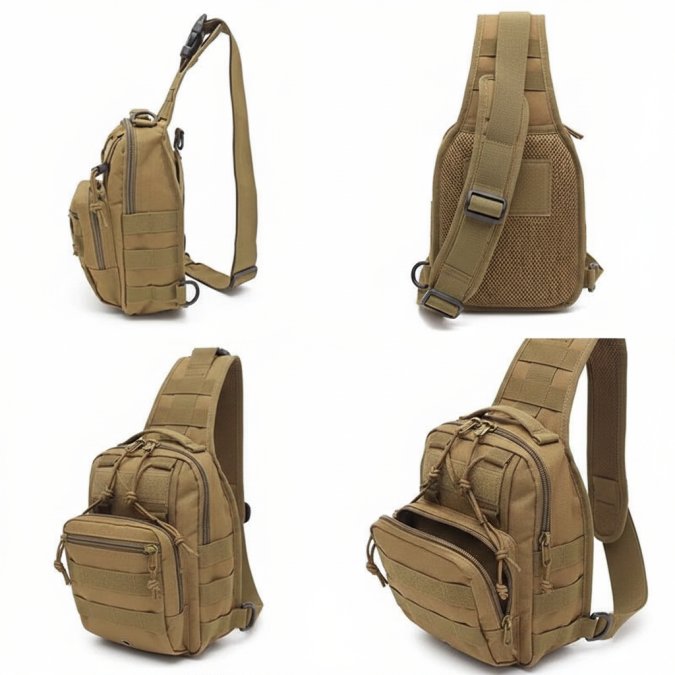
For trail days, we'd point you to The Sentinel - Tan Crossbody Bag.

Sling Bag Capacity for Commuting: How Much Space You Really Need
Sling bag capacity for commuting comes down to three things: your laptop, your lunch, and your layers. Most commuters need 6 to 12 litres.
Go bigger only if you carry gym gear or shop on the way home. Extra volume adds bulk and makes the bag swing when you walk.
A quick way to size it:
- Phone, wallet, keys: fits any sling
- 13-inch laptop plus charger: needs a padded main compartment
- Small lunch and water bottle: needs a separate front pocket
If your list stops at the third bullet, a sling is the right call.
Sling Bag vs Backpack for Commuting: Which Carry Wins on Transit
A sling bag wins for short commutes and crowded transit. A backpack wins for heavy loads and long walks.
The Sentinel – Tan Crossbody Bag →
Backpacks still win on two fronts: weight and ventilation. Two straps spread the load, and your back gets airflow.
So the answer depends on your route, not your gear budget. Short trip, light load: sling. Long trip, heavy load: backpack.
Sling Bag Packing Checklist for a Commute and a Day Hike
A packing list isn't enough. The real skill is configuring one bag so your laptop stays protected on the train and your trail gear stays reachable on the hike, without repacking every time. Use this three-zone system.
Zone 1: The Protected Core (Work Items)
This part of the bag never changes. It holds anything that must stay dry, flat, and uncreased.
- Laptop or tablet in a padded sleeve
- Charger and cable in a small pouch
- Notebook or documents in a flat folder
Keep these items in the same place every day. On hike days, either leave the laptop at home and use the space for a layer, or keep it in the sleeve and accept the extra weight. The protected core should always be the innermost, most padded part of the bag, never the front pocket where a water bottle can leak onto it.
Zone 2: The Daily Base Kit (Always Packed)
This kit lives in the bag whether you're commuting or hiking, letting you leave the house in two minutes.
- Phone and a short charging cable
- Wallet and transit card
- Keys on a clip
Keep the base kit packed and you never start from zero. The Vault - Black Crossbody Bag keeps this kit organized with a compact main pocket and an adjustable strap that works over a jacket.
Zone 3: The Swap Layer (Hike-Day Additions)
These go in only on hike days, in the most accessible part of the bag, the front pocket or an external attachment point.
- Trail map or offline map on your phone
- Extra water
- Sunscreen and a small first aid kit
How to Separate Wet, Dirty, and Sweaty Gear
The biggest failure point in a dual-use bag is cross-contamination: a wet rain shell soaks your laptop, or muddy trail shoes make your work clothes smell. Solve it with three cheap habits.
- Use a dry bag or stuff sack for wet items. A 5-litre roll-top stuff sack weighs almost nothing and keeps a wet shell or damp towel away from everything else.
- Keep a dedicated dirty-gear pouch. A simple zip pouch for muddy socks, a sweaty shirt, or trail trash keeps the main compartment clean.
- Line the protected core with a light dry bag. If you commute in rain or hike in wet conditions, a thin roll-top liner around your laptop sleeve is the cheapest insurance you can buy.
How to Keep Trail Essentials Accessible
On the trail, stopping to dig through a bag is annoying and sometimes unsafe. Set up your bag so these three things are reachable without taking it off:
- Water: a side pocket or a clip-on bottle holder. If your sling has MOLLE webbing, this is what it's for.
- Phone and map: a front or top pocket, not the main compartment.
- Snack and sunscreen: a small external pouch or the same front pocket.
For trail days, we'd point you to The Sentinel - Tan Crossbody Bag. Its MOLLE webbing takes a small pouch or clip, and the padded strap stays comfortable on a long walk. The tan finish hides trail dust well.
The Two-Minute Switch
The whole system comes down to one habit: keep Zone 1 and Zone 2 packed, and only move Zone 3 in and out. On a commute day, the bag is light and work-ready. On a hike day, add the swap layer, move your water to the outside, and you're gone. No repacking, no forgotten items, no wet laptop.
Fitting, Adjusting, and Keeping One Bag Comfortable All Day
Comfort comes from fit, not padding alone. Set the strap so the bag sits at your hip or lower back, not under your arm.
Three fixes for common pressure points:
- Shoulder ache: shorten the strap so the bag rests lower, near your hip
- Bag swinging on descents: tighten the strap and shift the bag to your front
- Sweaty back: pick a bag with a breathable panel and take it off on breaks
A sternum strap helps on longer walks, stopping the strap from sliding and spreading the pull across your chest.
Clean the bag every few weeks: wipe the inside with a damp cloth and let it dry fully before repacking. That keeps odors down, which matters if you carry a lunch or gym gear.
VentureVault.Shop builds crossbody bags for exactly this kind of everyday adventure. The Sentinel, The Stealth, and The Vault all use a hands-free crossbody design, durable construction, and an adjustable padded strap for all-day wear.
Get started with VentureVault.Shop and carry one bag that handles the train, the trail, and everything between.
Frequently Asked Questions
Can one sling bag really work for both hiking and commuting?
Yes, if you match the bag to your longest day rather than your shortest. A compact crossbody sling like The Vault holds a phone, wallet, keys, and a light layer for the commute, then carries the same essentials plus a snack and water bottle on a short day hike. The limits appear when you need a laptop, gym gear, or a full day of trail supplies. Past that point, either size up or carry two bags.
How much sling bag capacity do I need for commuting and a day hike?
Most commuters get by with a bag that holds a phone, wallet, keys, a small lunch, and a light jacket. Hike days add a water bottle, snacks, and a shell layer, which pushes you toward the larger end of compact sling bags. If your commute includes a laptop, a sling bag alone will not cover it, and a backpack is the better base. Match capacity to your heaviest regular day, not your lightest.
What features should a sling bag have for hiking?
Look for an adjustable padded shoulder strap, durable construction, and attachment points such as MOLLE webbing. The Sentinel and The Stealth both include MOLLE webbing for compatible accessories, multiple zippered compartments to separate essentials, and a padded strap designed for a secure fit. Water resistance matters on wet trails, and a strap that stays put matters more than extra pockets once you are moving.
How do I keep a sling bag comfortable during a long walk?
Keep the load light and the bag high. Tighten the strap so the bag sits against your lower back or chest rather than swinging at your hip, and move the bag to the front when you are in crowds or on transit. A padded adjustable strap, like the one on The Vault, spreads pressure better than a thin webbing strap. On longer walks, shift the bag position every hour to change where pressure lands.